• Home
  • Faculty/Ark of Peace
    • New to A Course in Miracles??
    • SFACIM Dedication, Mission, and Vision (under nonprofit “Ark of Peace”
    • Our Teachers
    • The Teacher-Pupil Relationship
    • The Community of Love
    • Ark of Peace Nonprofit Org. (Includes SFACIM)
  • ACIM
    • How It Came
    • What It Is
    • What It Says
    • Foundation for A Course In Miracles (FACIM)
  • Classes/Events
    • SFACIM Daily Calendar of Classes & Discussion Sessions on Zoom
    • Recommended for Newcomers
    • Ongoing Classes
    • Past Classes and Events
  • Resources
  • Musings
    • Lyn Corona
    • Conversations with Ken Wapnick
  • Free Mentoring Sessions

School for A Course In Miracles

"The universe of learning will open up before you."

School for A Course In Miracles

“The universe of learning will open up before you in all its gracious simplicity.” T-14. II. 6:4
  • Schedule
  • Beginners: New to “A Course in Miracles?”
  • Audio
  • Video
  • Topic Index
  • Contact SFACIM
You are here: Home / Blog

Online Weekly Course Meetings, Using Free Zoom Video Streaming…

May 11, 2019


Click here

for complete weekly mtg. schedule


Tuesday Online, 10 am Mt Time,

School for A Course in Miracles Class,

once a week

(… using the free Zoom app for live video streaming…)

These meetings are interactive,

allowing time for participants’ questions and comments. 

Tuesday Mornings,

(All mtgs are now 75 min. long) 

click here


Thurs. Online.

10-11:15am Mt Time 

click here for info


 Saturdays Online @ 10am Mt Time!

click here for info


Three New “Miracle Hour” Meetings Added!

click here



Participating students are encouraged to ask questions and are occasionally asked to share their own experiences that exemplify the topic.

It is also suggested that they take advantage of the opportunity to simply be students again, to listen and learn and apply the Course teachings right there in class…

No matter how many times they have heard or even taught the material themselves. Thanks!


Suggested Offering:

$10 per class, $25 a month for a specific weekly mtg.

or $50 a month for all weekly mtgs,

However, please never let lack of funds keep you from attending any of the meetings; simply donate whatever you can comfortably do.

It helps us keep the School for ACIM, its website, its podcast and youtube channels, and all its programs continuing and expanding. Thanks!

(click here to donate)


Video Tip:  

*It helps to be aware of front lighting on your face instead of back lighting when on streaming… Otherwise your face will be darkened and not see-able on the screen.  Thank you.


Filed Under: Past Classes and Events

Musings: A Little History on the Course by Ken & Gloria Wapnick

May 6, 2019

about-visionA Historical Context…

By Gloria and Kenneth Wapnick:


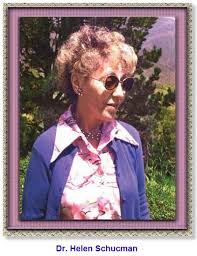
Helen Schucman, scribe of the Course, had a clear awareness that A Course in Miracles as A Course in Miracles would not be understood or welcomed by the world at large. She knew, from the wisdom of Jesus within her, that the purity of its non-dualistic thought system and its radical implications for daily living under the principle of forgiveness would indeed be threatening to all the thought systems prevalent in the world, including those of most spiritualities. It was clear to her that this would lead-as the Course’s brief history has already demonstrated-to the Course’s being considered flagrantly heretical to many, and totally unacceptable to others. In conclusion, Helen accepted as fact that the teachings of A Course in Miracles would not be widely understood in the pure form with which they had been dictated to her, nor would its true message be embraced by millions of people.

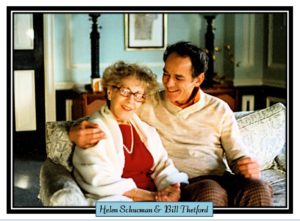
However, Helen certainly did not mean by this that the Course should be diluted or changed to suit the presumed needs of others. Indeed, just the opposite was the case. She and William Thetford, her partner in the collaborative venture of taking down the Course, knew that Jesus had given them A Course in Miracles as a sacred trust precisely because they would uphold its purity and preserve the clarity of its teachings. This holy purpose can be seen, incidentally, in the clear instruction Helen received from Jesus that the three books of the Course should not be abridged or separated, nor its curriculum altered in any way.

This sacred trust was extended to the Foundation for Inner Peace by Helen in 1975 as the official organization that would represent A Course in Miracles in the world. When she was instructed by Jesus to assign the copyright of the Course and all publishing rights to the Foundation, there were two explicit components to this assignment, reflecting the dual function the Foundation was to have: 1) publishing and disseminating A Course in Miracles; and 2) teaching the Course through publications and classes held at a future teaching center: a building Helen “saw” near a body of water, which she symbolically conceived to be white with a gold cross atop it that clearly represented Jesus. As was described in Kenneth’s book, Absence from Felicity: The Story of Helen Schucman and Her Scribing of A Course in Miracles, in the years prior to the Course’s publication there was serious discussion among Helen, Bill, and Kenneth (and later Judith Skutch Whitson and Robert Skutch) about establishing this teaching center where they would all live together and teach the Course, which was primarily to be Kenneth’s responsibility. For a variety of reasons, this specific form of a center did not come to pass during those early years, but the content of teaching always remained an integral part of the ongoing responsibility of the Foundation for Inner Peace.

Read more…


Filed Under: Home Posts

Helen Schucman & Bill Thetford Speak… hear the recorded voices of the two scribes of “A Course in Miracles!”

May 6, 2019


Helen Schucman


Only known public recording of…

Helen Schucman speaking

(in a 15 min. radio interview)


Helen Schucman’s Autobiography on ACIM.org:

(click here)

Although the scribing itself was relatively effortless, it did engender tremendous anxiety in Helen, though less in Bill. As Helen wrote:

“It made me very uncomfortable, but it never seriously occurred to me to stop. It seemed to be a special assignment I had somehow, somewhere agreed to complete. It represented a truly collaborative venture between Bill and myself, and much of its significance, I am sure, lies in that. I could neither account for nor reconcile my obviously inconsistent attitudes. On the one hand I still regarded myself as officially an agnostic, resented the material I was taking down, and was strongly impelled to attack it and prove it wrong. On the other hand I spent considerable time in taking it down and later in dictating it to Bill, so it was apparent that I took it quite seriously. I actually came to refer to it as my life’s work. As Bill pointed out, I must believe in it if only because I argued with it so much. While this was true, it did not help me. I was in the impossible position of not believing my own life’s work. The situation was clearly ridiculous as well as painful.”


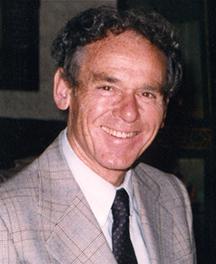
Bill Thetford


 Bill Thetford Talks About…

His Life & A Course in Miracles:

Part One:

Part Three


Bill Thetford’s Autobiography on ACIM.org:

(click here)

As to the impact of A Course in Miracles on Bill, he said:

“It changed my life totally. I recall typing the first fifty principles on miracles that came through Helen in the Fall of 1965, and realized that if this material was true then absolutely everything I believed would have to be challenged—that I would have to reconstruct my whole belief system. At the time, however, I thought that would be impossible; I didn’t know how I could do it. Yet I felt that was a requirement, since the material that came through Helen in the beginning phase seemed so authentic and genuine. I went into shock for a brief period, wondering how it would be possible to make such an abrupt change in my perception of life and the world. Later I realized that God is merciful, and does not ask us to make changes so abruptly, that there would be adequate time to gradually begin to shift my perception. I think what was important was my willingness to change, not mastery of the material.”


Ken Wapnick talks about Helen’s own Course process on Youtube

(click here)

(10 min.)


PBS “Visionaries” Documentary:

  (with Sam Waterston) 

Helen and the Course:

(click here)


Ken & Gloria Early Days

@ Roscoe, N.Y.

(click here)


One Hour Video Introduction to…

“A Course in Miracles”

by the School for A Course in Miracles

with a little history and a brief explanation of the Course’s metaphysics and its unique version of forgiveness …

(click here)


Six Month Online Course Immersion Program,

January- June 2022

(click here)


(Please, never let lack of funds be a deterrent in taking any of the SFACIM classes or events listed… give Tim a call @ 720-391-9294, leave a voicemail, and he will get back to you ASAP. We always try to work something out. We want you to be there!)


Filed Under: Home Posts Tagged With: A Course in Miracles, ACIM, Bill Thetford, forgiveness, Helen Schucman, Ken Wapnick, Peace, SFACIM

Autobiographical Book Release From Ken Wapnick’s Writings: “Symphony of Love”

May 6, 2019

The Temecula Foundation has released an autobiographical book from Dr. Kenneth Wapnick’s writings called a “Symphony of Love.”

Excerpt from Intro by Gloria Wapnick: The book begins with two very powerful unpublished autobiographies, My Life with God and My Life with Jesus. The first, My Life with God, Kenneth wrote at the request of Helen Schucman, who urged him to do that project in 1973. The second, My Life with Jesus, was done mostly after we moved to Temecula in 2001, since people kept asking for one…

Click here for more info and how to order

Filed Under: Home Posts Tagged With: A Course in Miracles, A Symphony of Love, ACIM, forgiveness, Ken Wapnick, perception, School for A Course in Miracles, SFACIM

A Conversation with Ken Wapnick: “The Course really works, if you work at it and smile!” … by Susan Dugan

May 6, 2019

NOTE: Clinical psychologist, teacher, and author Kenneth Wapnick, PhD, had taught A Course in Miracles since 1973 ( Ken passed away a few years ago), and had worked closely with Course Scribe Helen Schucman and Collaborator Bill Thetford in preparing its final manuscript. With his wife, Gloria, he was president and co-founder of The Foundation for A Course In Miracles (FACIM) in Temecula, California.

In the following conversation, Ken Wapnick generously answered all my questions about the daily practice of forgiveness, the fear and resistance that arises on our journey home, and how to keep our faith and focus on being kind, gentle, and patient with ourselves and other Course students while learning to smile with our inner teacher at all we still use to push love away.

(See Susan Dugan’s Website for more interesting stories and articles by Susan.)


Susan: I recently found myself in a lot of fear around this Course; feeling stuck and judging myself for it. You told me to remember not to take it seriously. How can we be serious about practicing forgiveness day-to-day while simultaneously not taking it seriously?

Ken: Well, the daily practice really is not to take it seriously. The principle is that line at the end of Chapter 27, “Into eternity where all was one there crept a tiny, mad idea, at which the Son of God remembered not to laugh.” The problem is not the ego—which means not any of the problems a person thinks he or she has—or the difficulty a person thinks he or she has with the Course. The problem is the reaction to it. The whole idea of not taking it seriously or learning to laugh at it does not mean you minimize it or deny it or make believe it hasn’t happened but that you recognize that the problem is never the form. The problem is always the mind’s decision.

Anything you do during the day whether it’s related to the Course or something else in your life; the key is always to bring it back to the mind’s decision maker. The problem is not the ego or its expression in thought or behavior, not what’s in the wrong-minded box because how could an illusion be a problem? What the Course calls the Holy Spirit which really is just our right-minded thinking or sanity; that’s not the answer either. The answer lies in choosing the right mind just like the problem lies in choosing the ego. That’s where people really get kind of confused.

The key is always to bring it back to the power of the mind to choose, not to bring it back to Jesus or the Holy Spirit as some magical figure. The problem is simply the choice about wanting to remain in the dream or awaken from it. So that even when one is having a bad time with the Course or a relationship or sickness or something that’s happening in the world, it’s not what it seems. The problem is never external. The practice is always bringing the problem back to the mind from where we projected it.

Susan: OK, so here’s a not so serious question: In many of your CDs you joke that Jesus can’t stand Course students.

Ken: (Laughs) You can’t blame him, can you?

Susan: Not really. 🙂 So, what are the characteristics of A Course in Miracles students that tick Jesus off most?

Ken: Well, it’s their seriousness. I sometimes also say that if you read the Gospels it never, ever says that Jesus laughed. It never says he smiled. It describes him as getting angry, as weeping. Ultimately the Jesus of the Bible is not the Jesus of the Course. The Jesus of the Course is always smiling. But in a sense, that’s the issue. When I say that half-jokingly, it’s the seriousness Course students have, the seriousness with the Course that makes them judge other people, judge other Course students and other Course teachers. It’s what makes them say such unkind things to people who are sick–namely that “sickness is a defense against the truth”–things that tend to be so insensitive.

I’ve probably quoted that one line in the text about remembering not to laugh more in thirty-five years of teaching than any other because that’s the problem. I also say that sin, separation, the ego can’t be the problem because how can an illusion be a problem? If people could recognize that and then apply that and generalize it to everything during their day it would change everything. That’s what’s in back of the line “Seek not to change the world, choose to change your mind about it.” How can a non-existent world be the problem?

The mistake people sometimes make after my saying something like that is that it turns you into someone who’s insensitive and doesn’t pay attention to anything, but it doesn’t mean that at all. To really know the world does not exist allows you to be the kindest, most sensitive, most caring and loving person imaginable. Because you don’t get hooked into anything and so the love automatically flows through you and takes whatever form is most helpful. It doesn’t mean you don’t relate to the world but you relate without neediness or specialness and only with love.

So as you’re sitting and watching the election returns, for example, you can have real compassion.

Well, obviously you can watch how seriously everybody takes it including the commentators and realize that everybody lies and everybody’s the same no matter what side of the aisle you’re on, which is why nothing every changes.

Susan: Many Course students experience a real sense of loss as they begin to recognize the ego’s fleeting adrenaline highs for the defenses against all-inclusive, eternal Love they are and accept the true valuelessness of the world we once completely believed in. Can you speak to this phase?

Ken: Well, another source of confusion for people working with the Course is the confusion of body and mind. As long as you identify as a body, then it’s impossible to work with the Course and not feel a sense of loss because it says over and over again you’re not a body. Your body doesn’t think and feel and sense; doesn’t live, doesn’t die. Reading that as an individual body; how could you not feel a sense of loss that somehow the Course is taking something away from you? And, of course, it’s not taking something away from you; it’s simply showing you that what you thought you were was an illusion.

Even in the larger sense, it’s impossible to work with the Course without recognizing what specialness is. Specialness is our identity; we identify with our neediness, our special love, special hate. The Course is really exposing that for what it is. And so I think it’s almost impossible for a serious student as he or she goes through the Course over a period of years not to feel a sense of loss and a sense of sacrifice and then a consequent sense of resentment.

In another context that makes the same point, I’ve been accused by people over the years of taking Jesus away from them. Because what I emphasize is that the Jesus of the Course is not the Jesus of the Bible, not this magical Santa Claus to whom you turn over your problems without doing any work yourself. He’s not this person who heals problems in the world; and so people feel a sense of loss that the God, the Jesus they’ve prayed to is not the Jesus or God of the Course. Basically what students feel as loss is really the loss of their specialness. But, again, it all comes down to; am I a mind, or a body? If I choose to see myself as a body that feeling of loss and sacrifice is inevitable.

Susan: And that’s the fifth stage of the Development of Trust where it just takes a long time to let go of that specialness and we need to be patient with ourselves?

Ken: Well, it doesn’t specifically say that but, yes. Accepting the true valuelessness of one’s self in order to achieve the sixth stage is what takes a long time. The Course is meant to be taken literally in the sense that its goal is to help us awaken from the dream. And you can’t awaken from the dream when you think you’re still a dream figure, which means the body; you can only awaken when you realize you’re the dreamer, which means the mind. You’re the mind that can choose whether to awaken or not.

You know you’ve made some real progress with this Course when you recognize that the you being addressed in the Course is the decision-making mind and not the person you think you are. That’s a qualitative shift. But that’s really hard to hold onto because we read it as a person with eyes that think they see and a brain that thinks it thinks. And that shift that I’m not a body—and that’s why that line “I am not a body, I am free” appears more than any other in the workbook—is so important. People don’t realize that because it’s as if there’s a wall that separates what we intellectually know from what we really experience. So we may read and believe the words that the world is an illusion and the body’s not real and I’m not really here and at the same time experience ourselves very much as persons. And that’s what takes a long time; losing our belief in our identity.

Susan: In a recent newsletter article—”A Heroic Frame of Mind”—you describe the tendency of Course students “to arrogantly believe they have attained its magnitude” when they have not yet done the daily work of forgiveness. Can you give a specific example of how this might manifest in a Course student’s behavior?

Ken: Well, that gets back to one of your previous questions. In a sense you end up being very judgmental and unkind. Because if you really do the daily work you will minimize your ego which means that you recognize everyone is the same and your heart goes out to everyone because you feel the pain in everyone. When you don’t do that and think you’ve accomplished something when you haven’t it means the ego is still alive and well but it’s buried. And whenever it is buried it projects out and you end up separating, judging, attacking, and just being unkind.

You know I talk and write about kindness more than any other term these days because people just forget common decency; just being kind. I wrote an article, I did a workshop on a line that they attribute to Philo of Alexandria: “Be kind, for everyone you meet is fighting a hard battle.” And when you realize that everyone is fighting a hard battle then you realize that we all have the same split mind. But when you think you’ve understood the Course but you really haven’t that’s the arrogance of thinking that you’re ego free. And then the ego stays buried and the guilt stays buried.

I’ve pointed out that what has gone wrong with Christianity for 2100 years is Christians think that just because they profess that the Lord Jesus Christ is the Lord and savior, they are free. But they’re not aware of their own guilt and ego thought system so they continue projecting and that’s why Christians end up being just like Course students when they don’t do the work. They’re very self-righteous and they end up condemning and judging everyone. If you don’t deal with your ego which you have to work daily on doing in terms of exposing it and choosing against it, it stays there. You think you’re ego free and yet your ego is alive and well. You’re unaware that you’re continually choosing it which inevitably means you’ll project it, and then you won’t be kind. And you won’t realize that everybody in this world is suffering because the world is not their home.

Susan: In that same article you talk about “the humility of being wrong” which seems to be the real opening or prerequisite to forgiveness. From moment to moment, catching myself being unkind, wanting to hold on to my specialness, and then deciding again that’s not what I really want. I want to see my innocence in others.

Ken: Right. You quoted that article about being willing to say I’m wrong and learning for that to be joyful, learning the Course is the means to awakening and returning home. And so you should be joyful because every day takes you closer to your goal. Learning is exposing your ego. And if you’re so afraid of making a mistake and you want to be perfect you’re not going to learn. There’s all that tension and anxiety and false belief again in thinking that you’ve done it when you haven’t. So in a sense when you find yourself making judgments about people; that should be a happy thing because it’s exposing your ego and that allows healing to occur. That’s the importance of that line “would you prefer to be right or happy?” The way you can be happy is to be wrong and to learn from the mistake. But if you want to be right, you’re going to think that you’ve done something when you haven’t and then you make yourself and everybody else around you unhappy.

Susan: Course students often repeat statements such as “I am as God created me” but I find it doesn’t work for me. Is there an inherent danger for Course students in trying to embrace our “magnitude” on the level of Truth rather than just focusing on forgiving our pull toward ego specialness?

Ken: I use the metaphor of the ladder. The Course speaks on many different levels and passages that really reflect what’s at the top of the ladder such as “I am as God created me” remind us of where we’re going and our goal of awakening from the dream. It’s not to live a happier dream here, but to awaken. At the same time there are all those passages that refer to this as a process and the work involved and the Workbook itself is all about that. It says at the end of the Workbook “this course is a beginning not an end.” So you have to understand the different levels or rungs of the ladder the Course speaks to.

When people seize on statements such as “I am as God created me” and leapfrog to the top or so they think what they’re really doing is avoiding the daily work. One of the things I emphasize is that the oneness of Christ and Heaven is not what we experience here. The way that we’re created as spirit is perfect oneness but the reflection of perfect oneness in the world is sameness and that’s where the work is. To realize that we’re all the same and if I keep that in mind, I can’t judge anybody because judging only differentiates and separates and attacks. So the way to remember that I am as God created me and awaken from the dream is to practice everyday realizing how we’re all the same and therefore no attack thought is ever justified.

And you’re absolutely right; you don’t go from the bottom rung to the top rung. People who think they have done it are denying the guilt in the mind and they project it out and become unkind and it’s just another form of specialness. But if they do the daily work which is reflecting perfect oneness by learning to see everyone as the same, that’s forgiveness and that’s what gets you up the ladder. And the higher up the ladder you get the more you realize we’re all the same and attack is impossible. How could you attack yourself? It’s that sameness–the all-inclusiveness of forgiveness—that’s the heart of the practice. Everyone is fighting the same hard battle and if the Sonship is one in reality, then what awakens us is recognizing you are also the same in the illusion. You can’t exclude anyone from your forgiveness.

I sometimes say that if people started on page one of the text and went through all three books and looked at every time the word “all” and “every” appear whether literally or as a concept, they’d be astounded. It’s the all-inclusiveness of the Course’s vision that makes it what it is.

Susan: Practicing forgiveness day in and day out with whatever comes up, I’ve found that some areas and people in my life that used to trigger conflict no longer do, as if healed without any direct effort on my part. Conversely, I have completely new areas and people I’ve never had a problem with that suddenly seem to be in conflict. What’s going on here?

Ken: Well, the first part of what you said — that a grievance all of a sudden is gone — and really the second part — all of a sudden getting upset with someone you had no grievances with — are really heads and tails of the same process. In the first part, when you keep working at undoing the guilt and unforgiveness of yourself, it generalizes. So you don’t have to forgive every single person because they’re all the same. And the Course says behind each brother are thousands and behind each one of those, another thousand. It’s like a domino effect. So when you’re really working on some key issues and can let those grievances go, they have to generalize. So all of a sudden someone you had a grievance with, the grievance is gone because the unconscious guilt is gone. But, not all the guilt is gone. So, you’re saying I’m no longer angry at person A but there’s still guilt and all of a sudden that guilt will be projected at person B that you never had an issue with before.

That shows you that the problem was never person A or person B, anyway. That’s where you have to understand the Course’s metaphysics that there’s no one out there. So the guilt will just land wherever it works best for your ego. So it’s not only that you’re never upset for the reason you think, you’re never angry for the reason you think and you’re never angry at the person you think because it’s not the person. So as you do your daily work and you’re forgiving more and more and letting go of your unforgiveness of yourself, then people you thought you hated all of a sudden the hate is gone because the guilt is gone. But if there’s still some guilt lurking it can easily find another target. All of that helps you realize, it’s never the external that’s the problem.

And there just seems no end to the places where it can crop up.

There’s never any end to it as long as there’s still some guilt.

Susan: But it is being chipped away at as you forgive what’s in your face, in your classroom everyday. That’s the process part?

Ken: Yes. But you don’t have to know what’s going on, because it’s unconscious anyway. Each and every time you find yourself angry you remember that I’m never upset for the reason I think. I sometimes say the only two lessons you really need to master are lessons 5 and 34, “I’m never upset for the reason I think” and “I could see peace instead of this.” That brings the problem back to my mind, and reminds me peace is a decision. And as long as I’m doing that, there will be wonderful effects that I don’t even need to understand.

Susan: I love this Course. Forgiveness has brought me so much real comfort and I’m really grateful to you for helping me understand the practice. It’s helped me see everything as the same problem, and generally made me much more tolerant. But I am still on a journey, still often afraid of losing this special identity, ambivalent about its value and at times terrified of losing my special relationships even as I watch myself pushing human love away. Can you give those of us somewhere in the murky middle of this journey home any advice on keeping the faith? In other words, can you give us a little pep talk, Ken?

Ken: Well, the process really works and you feel much better. I sometimes tell people just plant your nose on the page in front of you, don’t worry about the whole rest of the music, work on what’s directly in front of you and trust that there’s a love in you that you’re choosing to get closer and closer to. And if you really work day in and day out on just looking at your ego projections, then the payoff is immeasurable. It’s just incomprehensible how wonderful it is and you will continue to feel much better. The Course really works, if you work at it, so don’t stop. The key is to work at it with a gentle smile and not with all that seriousness.

Filed Under: Site Map, Susan Dugan

  • « Previous Page
  • 1
  • …
  • 21
  • 22
  • 23
  • 24
  • 25
  • …
  • 57
  • Next Page »

Search A Course in Miracles topic or class on this website: Type your search here & then hit “Enter”

Help School for ACIM Provide Our Weekly Online Classes on The Study & Practice of ACIM


ONLINE Weekly SFACIM Classes:

SFACIM: Complete Schedule of Classes & Discussion Sessions Online on Zoom (thru Dec. 2026)

ZOOM Link for Weekly SFACIM 90 Minute Classes… and 75 Min. Discussion Sessions

After first two weeks of donation-free classes: Suggested monthly donations to continue access to weekly live online classes… and also receive link for SFACIM Video Library with hundreds of Class Replays

Sundays: 9:30am Mt. on The ACIM Text (90 min.)

Sunday ACIM Vesper Sessions @ 6pm Mt

Mondays: Zoom Discussions on ACIM @ 9:30am Mt (begin in August). … & … Classes on Ken Wapnick’s “Journey Through The Text” @ 5:30pm Mt. Time

Tuesdays Online: “Together on The Resurrection Road” 10-11:30am Mt.

Wed. Gathering of Men: Online ACIM Men’s Discussion Group @ 5:30pm Mt.

Thursdays @ 5:30pm Mt: Discussions of FACIM Books on ACIM (starting in Oct.: The Lighthouse, An Anthology)

Fridays: 75 Min. Zoom ACIM Discussion Sessions on “The Song of Prayer Pamphlet” @ 9:30am Mt

Saturdays @ 9:30am Mt. on Current WB Lessons of The Week

Some Recent SFACIM Class Replays…

New Classes & Upcoming Events:

$100 discount if you register for Immersion 2027 before the end of this month of October!  Proposed 2027 Immersion Schedule: Saturday Immersion Classes, Jan. thru May: 9:30-11am Mountain Time (except no Immersion class on the last Saturday of each month)  Please adjust for time shift in USA in March, 2027 to Daylight Savings Time, one […]

 Guidelines for SFACIM Online Class Participation: We are a School for A Course in Miracles (SFACIM), whose classes’ purpose is to present a coherent, consistent, and clear process of forgiveness based on Dr. Kenneth Wapnick’s teachings on Jesus’s A Course in Miracles (ACIM). **Unlike most ACIM meetings and discussion groups, our SFACIM classes are different in […]

  Sunday ACIM Sessions with Lyn & Friends @ 6pm Mt   45-60 min. sessions,  free and unrecorded. we will rest together in the stillness… with some discussion, selected  readings and some quiet time. For complete SFACIM weekly Schedule, and for Zoom link if you do not already have it,  click here

Please join our current Thurs.  evening series @ 5:30pm Mountain Time… you can come try it at any time and see if it ‘works’ for you.  Ken Wapnick book discussions on Thursday Evenings @ 5:30pm Mountain Time       Beginning in early Oct. 2026:   (Excerpted from the Introduction to this Anthology) In 1990, the […]

Announcements:

Course Immersion 2027: Five Month Online Intensive for All Students of “A Course in Miracles” (excellent for beginning students of ACIM, and also very helpful for long-time Course students!)

SFACIM: Complete Schedule of Classes & Discussion Sessions Online on Zoom (thru Dec. 2026)

Beginners: New or Fairly New to A Course in Miracles?

ACIM 10 min. video clips by Ken Wapnick

SFACIM Podcasts & Video Libraries

Sunday ACIM Vesper Sessions @ 6pm Mt

Thursdays @ 5:30pm Mt: Discussions of FACIM Books on ACIM (starting in Oct.: The Lighthouse, An Anthology)

Our Current SFACIM Email Address…

All Course quotes are from A Course in Miracles, copyright ©1992, 1999, 2007 by the Foundation for Inner Peace, 448 Ignacio Blvd., #306, Novato, CA 94949, ACIM.org (Contact), used with permission.

Site Map · Copyright © 2025 · Lyn Corona
customized by Intent Design Studio (editor of ACIMblog.com) · hosted by BlueHost · WordPress